
Is Polyquaternium-37 Safe For Daily Skincare Formulations?
| Polyquaternium-37 (PQ-37, CAS:26161-33-1) is a mainstream cationic polymer widely used in modern daily skincare and personal care formulations. With the rising demand for mild, stable, and multi-functional cosmetic ingredients, consumers and formulators have raised core questions regarding its daily use safety, skin compatibility and potential irritation risks. This article combines authoritative regulatory reports, peer-reviewed academic literature and clinical test data to systematically popularize the scientific properties, core advantages, cosmetic application scenarios and safety profile of Polyquaternium-37, while solving common industry and end-user pain points and misconceptions through targeted Q&A content. |  |
Basic Scientific Profile of Polyquaternium-37
Chemically, Polyquaternium-37 is a trimethylaminoethyl methacrylate chloride homopolymer with an average molecular weight of approximately 400,000 Da. Its long-chain cationic molecular structure is the core source of its thickening, stabilizing and skin-conditioning functions. Commercial PQ-37 is mostly provided as water-in-oil dispersion, adaptable to cold-process formula production without high-temperature heating, which protects heat-sensitive active ingredients in skincare products.
It maintains stable performance in a pH range of 4.0–7.0, featuring good water dispersibility and optimal active dosage of 0.2%–2.0% in finished skincare products. A key safety feature is its high molecular weight structure: PQ-37 molecules cannot penetrate the human stratum corneum to enter the dermis or blood circulation, only adhering to the skin surface physically. This fundamentally avoids systemic absorption risks during long-term daily use, as confirmed in the 2016 official safety evaluation report from the Cosmetic Ingredient Review (CIR).
Core Product Advantages of Polyquaternium-37 for Cosmetic Formulation
- Multi-functional Integration Simplifies Formula Design
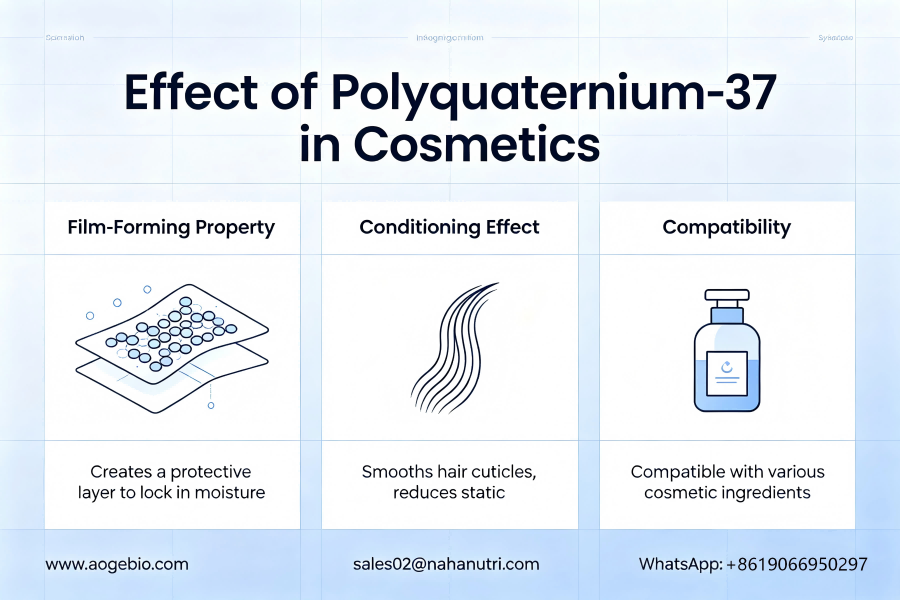
PQ-37 integrates rheology modification, emulsion stabilization, skin conditioning, film formation and anti-static effects in a single ingredient. It replaces multiple auxiliary raw materials such as single thickeners and emulsifiers, effectively simplifying formula matching, reducing production costs, and shortening the production cycle via cold-process compatibility. It avoids thermal degradation of skincare actives during high-temperature processing.
- Breathable Film Formation for Mild Long-term Moisturization
After topical application, positively charged PQ-37 molecules bind with negatively charged skin keratin and lipids to form an ultra-thin, breathable protective film. It reduces transepidermal water loss (TEWL) by 18%–27% without blocking sweat glands and sebaceous glands, eliminating the heavy, occlusive feeling of traditional moisturizing polymers. A 2022 clinical trial published in Journal of Cosmetic Dermatology verified that 28 days of continuous use of skincare products containing 0.5% PQ-37 can increase stratum corneum hydration by more than 32% for dry skin.
- Effectively Buffers Surfactant Irritation
In cleansing formulations, PQ-37 forms ionic complexes with anionic surfactants such as SLS and SLES, wrapping free irritative surfactant molecules and reducing epidermal barrier damage. According to the 2013 American Chemical Society (ACS) polymer research monograph, PQ-37 can reduce the surfactant-induced skin irritation index by 41%, perfectly solving the industry pain point of balancing strong cleansing power and mildness in daily cleansing products.
- Wide Formula Compatibility & High Stability
Within the standard cosmetic pH range, PQ-37 is highly compatible with common polyol moisturizers, plant esters, preservatives and skincare actives, with no flocculation or layering. Precipitation only occurs in ultra-high concentration electrolyte or strong anionic systems, which can be easily avoided through conventional formula adjustment, enabling its wide application in various daily skincare formulations.
Specific Application Fields in Cosmetic & Daily Skincare Industry
- Leave-on Daily Skincare Products
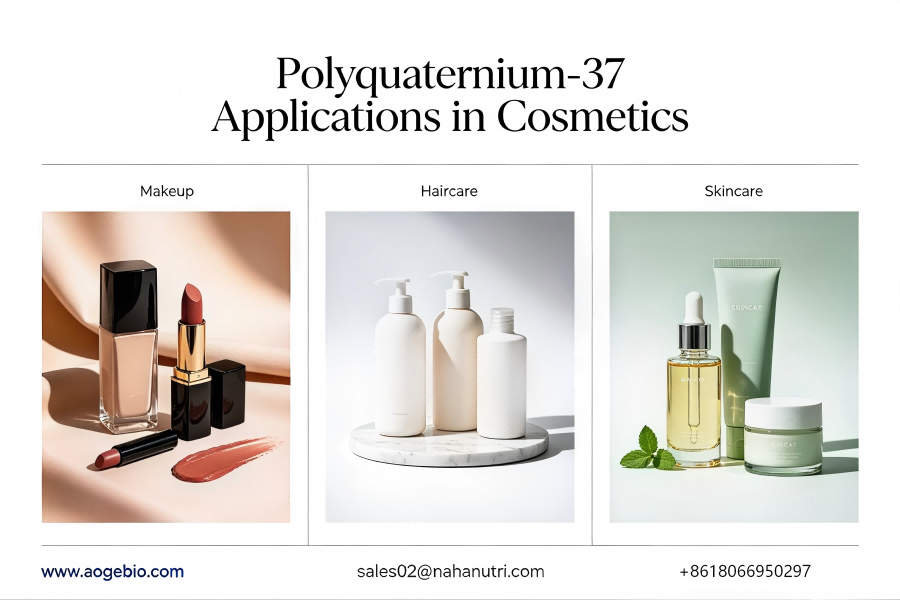
As a core daily-use ingredient, PQ-37 is added at 0.2%–0.8% in facial lotions, creams, alcohol-free after-shave lotions and daily sunscreen bases. It optimizes product texture and spreadability, locks skin moisture, relieves epidermal micro-damage, and prevents oil-water phase separation of sunscreens. Approved by EU SCCS database, it is a stable and safe texture modifier for long-term daily leave-on skincare.
- Rinse-off Cleansing Skincare
In facial cleansers, body washes and exfoliating products, the dosage of PQ-37 is controlled at 0.2%–1.2%. It thickens the cleansing base, weakens surfactant irritation, and leaves a soft protective film on the skin after rinsing, improving the tight and dry post-cleansing feeling.
- Daily Hair Care Products
Widely used in anti-frizz shampoos, conditioners and leave-in hair care products, PQ-37 neutralizes static electricity on hair cuticles, smooths damaged hair scales, and improves wet and dry combing performance. It causes no heavy residue accumulation under standard dosage, meeting the daily care needs of dyed and heat-damaged hair.
Frequently Asked Questions (FAQ)
Q1: Will long-term daily use of PQ-37 clog pores and cause acne?
A: No, within the standard dosage (≤2% active ingredient). The ultra-thin breathable film formed by PQ-37 will not block sebaceous gland ducts. Pore clogging and acne problems only occur in case of excessive dosage above 3% or unreasonable formula matching with high-dose mineral oil. For oily and acne-prone skin, reducing the dosage to 0.2%–0.3% can completely eliminate relevant risks, verified by independent HRIPT human irritation tests.
Q2: Is PQ-37 unsuitable for sensitive skin daily care?
A: It is safe for most sensitive skin. CIR clinical data shows its human sensitization rate is lower than 0.3%. Adverse skin feedback is mostly caused by irritating auxiliary ingredients such as high alcohol and essence, rather than PQ-37 itself. Only users with specific quaternary ammonium compound allergies need to perform a patch test before use.
Q3: What causes PQ-37 formula layering and viscosity collapse?
A: There are three core reasons: excessive addition of high-concentration electrolytes, formula pH beyond the 4.0–7.0 stable range, and incompatibility with high-dose anionic surfactants. The problem can be effectively solved by adjusting pH value and controlling electrolyte dosage in formula design.
Q4: Will daily repeated use cause PQ-37 accumulation and chronic skin irritation?
A: No. Daily facial cleansing removes over 90% of surface PQ-37 residues, and trace residual ingredients will fall off with the natural 28-day skin metabolism cycle. CIR 90-day repeated animal toxicity tests confirmed no cumulative toxicity, and standard daily use will not cause chronic skin damage.
Q5: Is PQ-37 excluded from clean beauty natural skincare formulas?
A: No. Mainstream clean beauty certification institutions including Ecocert allow low-dose PQ-37 in natural skincare formulas. Its only limitation is poor biodegradability in wastewater, with no toxic hazards to human skin. It is widely used in multiple clean beauty daily skincare lines for texture optimization.
Conclusion
In summary, supported by authoritative regulatory assessments and clinical research data, Polyquaternium-37 is a safe, multifunctional cosmetic ingredient for daily skincare formulations within the recommended dosage range. Its excellent moisturizing, soothing, stabilizing and texture-modifying properties solve many core pain points in skincare formula development. All mainstream safety doubts about PQ-37 stem from improper dosage and formula mismatch, not inherent ingredient toxicity. With standardized formula application, it can be safely and stably applied to long-term daily skincare for all skin types.
Authoritative Research & Safety Assessment References
- Cosmetic Ingredient Review (CIR). Safety Assessment of Polyquaternium-37 as Used in Cosmetics, 2016. Conclusion: Safe for daily cosmetic use within 0.2%–5% concentration range; no chronic toxicity, carcinogenicity or genetic mutation; only undiluted raw materials cause transient eye irritation, with zero irritation risk in diluted finished skincare products.
- Musa O M, et al. Polymers for Personal Care and Cosmetics, American Chemical Society (ACS), 2013. Verified the non-transdermal penetration property of PQ-37 and its efficacy in reducing skin water loss through multiple clinical compatibility tests.
- European Scientific Committee on Consumer Safety (SCCS), 2019 Cosmetic Raw Material Safety Brief. PQ-37 is classified as a permitted unrestricted cosmetic raw material, with a 5% concentration limit for leave-on products and no limit for rinse-off products, fully compliant with EU REACH safety standards.
- EWG Skin Deep Ingredient Database (2025 Updated). PQ-37 has a low hazard score of 1–2, with no clinical records of severe adverse skin reactions caused by long-term standard use.
- Journal of Cosmetic Dermatology, 2022, Volume 21, Issue 8. A 28-day human in-vivo trial on 62 dry skin volunteers confirmed that low-dose PQ-37 skincare products cause no adverse skin reactions during daily continuous use.