
Discover Salicylic Acid for Gentle Exfoliation & Clearer Skin
The Science BehindSalicylic Acid: What Makes It Unique?
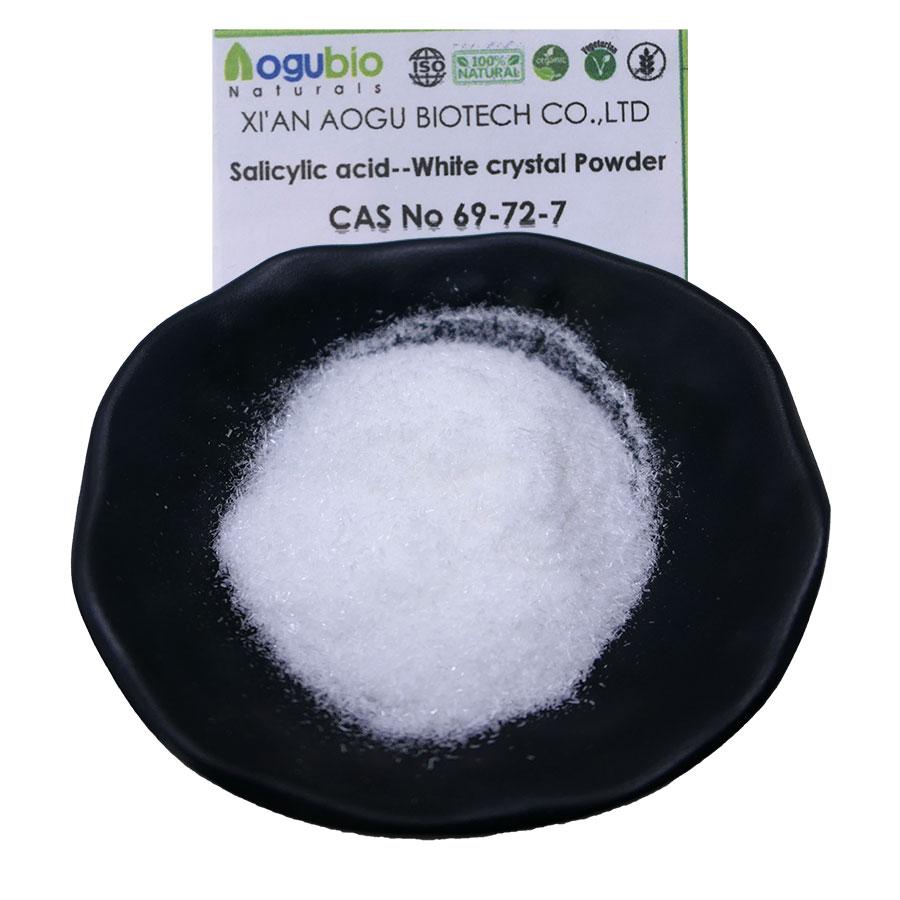
Salicylic acid, chemically known as C₇H₆O₃, is a naturally derived ingredient first extracted from willow bark, earning it the nickname "willow acid". Modern production primarily relies on chemical synthesis, retaining its dual hydrophilic and lipophilic properties—a key feature that sets it apart from water-soluble alpha-hydroxy acids (AHAs) like Glycolic Acid. This amphiphilic structure allows it to penetrate deep into hair follicles, which are filled with sebum, making it highly effective for addressing pore-related issues.
Its core mechanisms of action are well-documented in dermatological research:
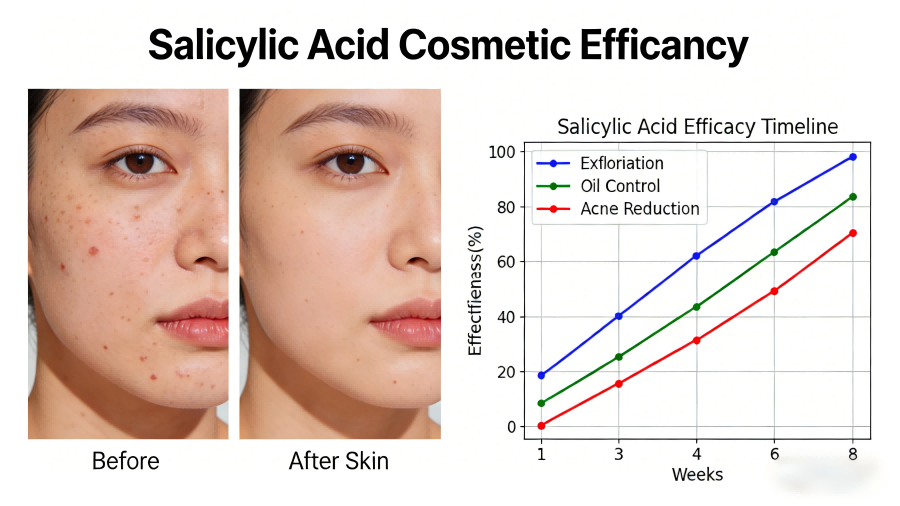
- Keratinization Regulation: Salicylic aciddissolves the intercellular cement that binds dead skin cells, promoting gentle Exfoliation of the stratum corneum. This process smooths rough skin and prevents the buildup of keratin that clogs pores.
- Pore Cleansing & Oil Control: As a lipid-soluble ingredient, it penetrates sebaceous glands to dissolve excess oil and debris, effectively unclogging blackheads, whiteheads, and acne lesions.
- Anti-Inflammatory & Antibacterial Effects: Studies confirm that salicylic acid inhibits cyclooxygenase (COX) activity, reducing the production of pro-inflammatory prostaglandins. Its anti-inflammatory efficacy is comparable to 82% of hydrocortisone, making it ideal for calming acne-related redness and swelling. It also creates an unfavorable environment for Cutibacterium acnes, the bacteria linked to acne breakouts.
- Skin Regeneration Promotion: By accelerating epidermal cell turnover, it stimulates the production of collagen and hyaluronic acid, improving skin texture, fading post-inflammatory hyperpigmentation, and reducing the appearance of fine lines.
Salicylic Acid in Cosmetics: Applications & Product Advantages
Common applications in cosmetics include:
- Cleansers: Effectively remove surface oil and pore debris without stripping the skin’s barrier.
- Toners & Exfoliants: Deliver targeted exfoliation to improve dullness and congestion.
- Acne Treatments: Target inflammatory acne, blackheads, and whiteheads with sustained-release formulas.
- Moisturizers: Combine exfoliation with hydration to suit oily and combination skin types.
- Body Care: Address rough skin conditions like keratosis pilaris (chicken skin) on arms and legs.
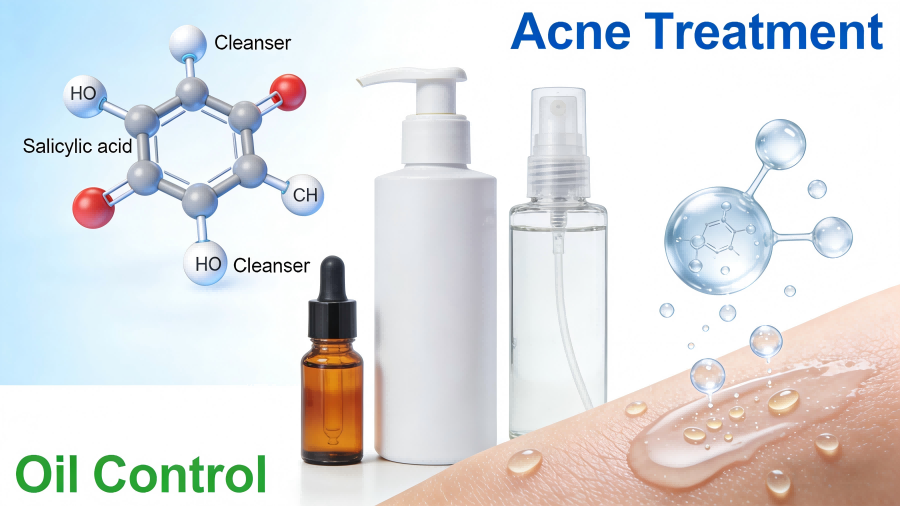
The key advantages of salicylic acid-based products include:
- Targeted Efficacy: Lipid solubility enables deep pore penetration, unlike AHAs that only act on the skin surface.
- Gentle Exfoliation: Compared to physical scrubs, it avoids micro-tears in the skin, reducing irritation risk.
- Multifunctional Benefits: Simultaneously addresses exfoliation, oil control, anti-inflammation, and skin regeneration.
- Broad Applicability: Suitable for oily, acne-prone, and dull skin; low-concentration formulas can be adapted for sensitive skin with proper tolerance building.
Prevalent Pain Points in Salicylic Acid Products & Solutions
Pain Point 1: Irritation from High Concentration or Rapid Release
Traditional high-concentration (30%) salicylic acid products use alcohol-based carriers that release ingredients rapidly, often causing stinging, redness, peeling, and barrier damage—especially for skin with compromised barriers or sensitivity. Even low-concentration products may trigger dryness and irritation with improper formulation.
Solution: Controlled-Release & Encapsulation Technology. Innovative microencapsulation and liposomal wrapping technologies have revolutionized salicylic acid delivery. These technologies encapsulate salicylic acid molecules, enabling slow release over 12 hours to avoid concentrated irritation. They also enhance penetration efficiency by 7-8 times while reducing direct damage to the epidermis.
Pain Point 2: Insufficient Efficacy Due to Short Contact Time
Traditional professional salicylic acid peels adhere to a 2-5 minute contact time rule, based on safety concerns with alcohol-based formulations. However, research shows this timeframe only affects the top 1-2 layers of the stratum corneum, failing to fully dissolve deep follicular plugs or exert optimal anti-inflammatory effects. The lack of a "reservoir effect" in the stratum corneum also leads to rapid efficacy decay.
Solution: Extended Contact Time with Safe Formulations. Optical coherence tomography studies confirm that salicylic acid penetration depth is positively correlated with contact time. Sustained-release formulations allow 20-30 minutes of contact, enabling the ingredient to reach the viable epidermis, inhibit COX enzyme activity, and form a drug reservoir in the stratum corneum for prolonged efficacy. This approach significantly improves results for moderate-to-severe inflammatory acne without increasing irritation risk.
Pain Point 3: Uneven Efficacy & Application Issues
Gel or cream-based salicylic acid products often have poor spreadability, leading to uneven application—concentrating in skin folds (e.g., nasolabial folds) and causing over-exfoliation, while other areas receive insufficient coverage. Manual massage to promote penetration increases operational complexity and the risk of human error.
Solution: Liquid Formulation Innovation. Liquid salicylic acid products offer superior spreadability, ensuring uniform coverage across the entire face, including hard-to-reach areas. They eliminate the need for manual massage, reaching effective concentrations in 2-5 minutes—much faster than traditional cream formulations. Paired with dedicated cooling patches, liquid formulations simplify professional operation, reduce human error, and enhance user comfort.
Pain Point 4: Sun Sensitivity & Barrier Damage
Salicylic acid accelerates keratin metabolism, which thins the stratum corneum and increases the skin's sensitivity to ultraviolet radiation. Improper use can lead to sunburn, pigmentation, and long-term barrier damage.
Solution: Synergistic Formulation & Usage Guidance. Formulations should include barrier-protective ingredients (e.g., ceramides, hyaluronic acid) to support skin regeneration while exfoliating. Additionally, clear usage guidance—such as daily broad-spectrum SPF 15+ sunscreen application, avoiding peak sun exposure, and gradual tolerance building (starting with 2-3 times weekly)—minimizes sun sensitivity risks. Unlike AHAs, salicylic acid’s benzene ring inhibits UVB-induced sunburn cell formation, further reducing photodamage potential when used with proper sun protection.
Conclusion
Salicylic acid’s unique lipid-soluble properties, multifunctional efficacy, and extensive research support make it an unparalleled choice for gentle exfoliation and clearer skin. While market products once struggled with irritation, uneven efficacy, and sun sensitivity, technological innovations—including controlled-release systems, liquid formulations, and synergistic ingredient blends—have resolved these pain points, expanding its applicability to more skin types. Whether in daily OTC products or professional aesthetic treatments, salicylic acid continues to set the benchmark for safe, effective exfoliation. By choosing scientifically formulated salicylic acid products and following proper usage guidelines, users can achieve a smoother, clearer, and healthier complexion without compromising skin health.
- Name: Yuki
- E-mail: sales02@nahanutri.com
- WhatsApp:+8618066950297